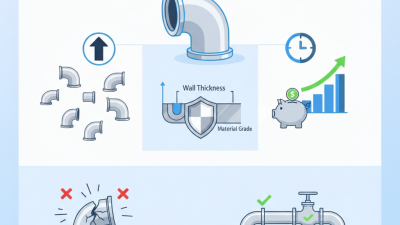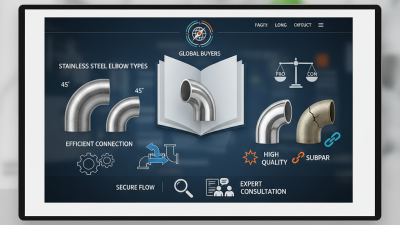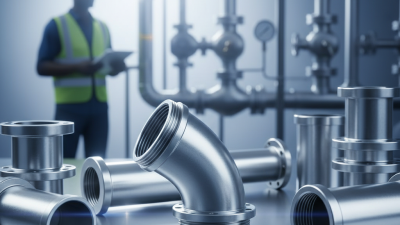
Choosing the right Stainless Steel Elbow in 2026 requires more than comparing prices or surface polish. A fitting may look flawless yet fail in a demanding process line. Details matter. The correct choice depends on fluid type, temperature, pressure, pipe diameter, wall thickness, and installation conditions. Experienced engineers also check whether the elbow matches the system’s welding method and flow requirements.
Material selection deserves careful attention. Grade 304 often suits general water, food, and indoor applications, while 316L provides stronger resistance in chloride-rich or marine environments. However, these are practical guidelines, not automatic answers. Concentration, cleaning chemicals, heat cycles, and stagnant areas can change performance. A short-radius elbow may save space, but it can create higher turbulence and pressure loss. A long-radius design usually supports smoother flow, especially in pumps, process piping, and compressed-air systems.
Reliable purchasing also depends on documented quality. Look for dimensional inspection reports, material certificates, pressure ratings, surface-finish details, and traceability records. Confirm standards, connection types, schedules, and tolerances before approval. A reputable manufacturer should explain its testing process clearly and provide samples when specifications are uncertain. I have seen projects focus heavily on price, then spend more on rework caused by mismatched dimensions. That mistake is easy to repeat. This guide examines the key factors behind a dependable Stainless Steel Elbow decision, while recognizing that every installation has different risks, limits, and imperfect assumptions.
What Is a Stainless Steel Elbow and Where Is It Used?
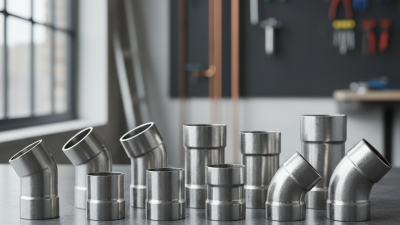
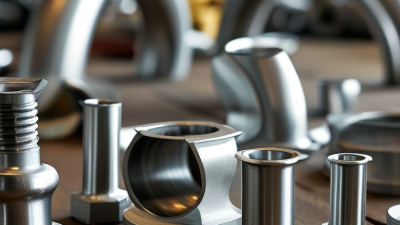
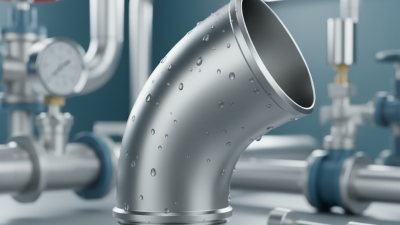
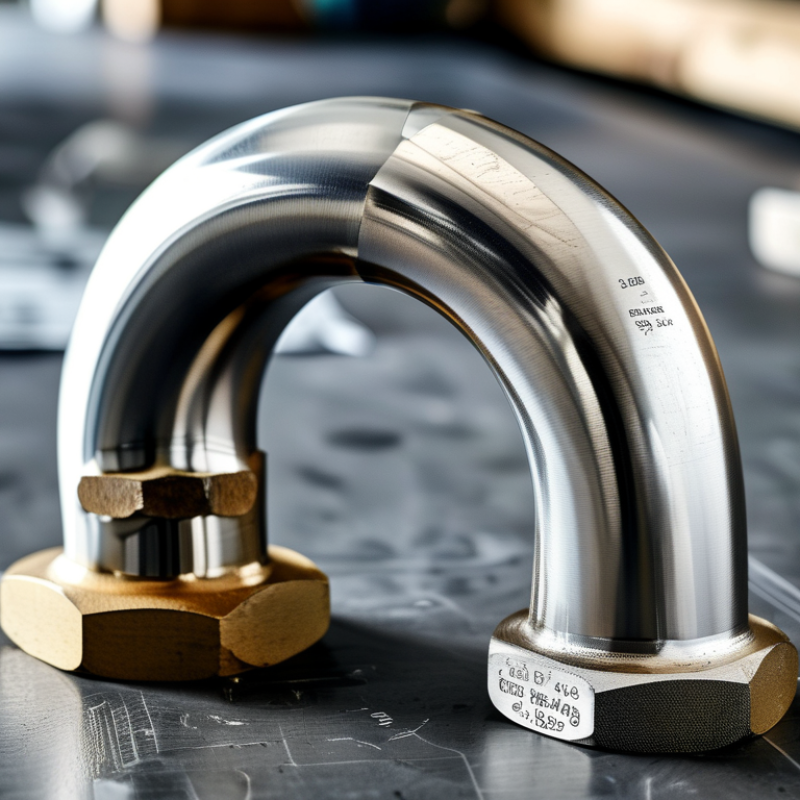
A stainless steel elbow is a pipe fitting that redirects fluid flow. Common angles include 45, 90, and 180 degrees. Long-radius elbows reduce turbulence and pressure loss, while short-radius types save space. They connect pipes in water treatment, food processing, pharmaceutical production, chemical plants, and marine systems. In compact utility rooms, a 90-degree elbow can turn a line around a steel column without adding a large loop.
According to the World Stainless Association’s 2023 statistics, global stainless steel production reached about 58.4 million tonnes. This volume reflects stainless steel’s broad use in demanding infrastructure. However, corrosion resistance is not automatic. Chloride-rich water can cause pitting, especially when surfaces remain wet or contaminated. Grade selection must match the actual environment, not only the project’s purchase list. That detail is often underestimated.
For butt-weld elbows, ASME B16.9 defines dimensions, tolerances, and pressure-related design requirements. ASTM A403 covers wrought austenitic stainless steel fittings, including several commonly used grades. Engineers should check material grade, wall thickness, bend radius, temperature, pressure, and welding procedure together. A thicker elbow is not always the better elbow. Poor alignment can create stress, dead zones, and difficult cleaning. Field inspections sometimes reveal an uncomfortable issue: the fitting meets the drawing, but not the operating reality. Specification reviews should therefore include fluid chemistry, flow velocity, drainage, and inspection access before selection.
| Elbow Type | Common Angle | Typical Radius | Main Function | Typical Applications | Selection Considerations |
|---|---|---|---|---|---|
| Long-Radius Elbow | 45° or 90° | Usually 1.5D, where D is the nominal pipe size | Changes flow direction while reducing pressure loss and turbulence | Process piping, water treatment, chemical systems, food and beverage lines | Preferred where lower friction, smoother flow, and reduced erosion are important. |
| Short-Radius Elbow | 90° | Usually 1.0D | Provides a compact directional change | Space-restricted piping layouts, utility lines, and selected low-velocity services | Requires less installation space but generally creates greater turbulence and pressure loss than a long-radius elbow. |
| 45-Degree Elbow | 45° | Long-radius or short-radius designs may be available | Makes a gradual change in direction | Pump discharge lines, drainage systems, general process piping, and flow distribution systems | Useful when a gentler turn is needed; confirm the available radius and end-to-end dimensions before ordering. |
| 90-Degree Elbow | 90° | Commonly 1.0D or 1.5D | Turns the pipeline through a right angle | Connecting vertical and horizontal pipe runs, equipment nozzles, and utility piping | Choose long radius for improved flow performance or short radius when installation space is limited. |
| 180-Degree Return Bend | 180° | Usually a long-radius return configuration | Reverses the direction of flow | Heat exchangers, heating coils, compact circulation loops, and industrial process systems | Check the return-bend center-to-center dimension, drainage requirements, and accessibility for cleaning. |
| Butt-Weld Elbow | 45°, 90°, or 180° | Long-radius or short-radius | Creates a permanent welded connection with a smooth internal bore | High-integrity process piping, sanitary systems, high-temperature services, and chemical plants | Verify pipe outside diameter, wall thickness, bevel details, welding procedure, and applicable dimensional standard. |
| Socket-Weld Elbow | Usually 90° or 45° | Compact fitting geometry | Connects smaller-diameter pipes by inserting the pipe into a socket before welding | Instrumentation lines, small-bore utility piping, and high-pressure auxiliary systems | Suitable for smaller sizes; consider crevice formation, thermal expansion, and the service’s cleanliness requirements. |
| Threaded Elbow | Usually 90° or 45° | Compact threaded configuration | Provides a demountable connection without welding | Low-to-moderate pressure utility lines, maintenance connections, and selected instrument services | Confirm thread type, sealing method, pressure rating, and compatibility with vibration or cyclic temperature changes. |
| Common Stainless Steel Grade | Approximate Composition Feature | Suitable Service Environment | Advantages | Important Limitations |
|---|---|---|---|---|
| 304 / 304L | Chromium-nickel austenitic stainless steel; 304L has lower carbon | General process water, food equipment, architectural piping, and many atmospheric environments | Good corrosion resistance, formability, weldability, and broad availability | Less resistant to chloride-induced pitting and crevice corrosion than molybdenum-bearing grades. |
| 316 / 316L | Chromium-nickel-molybdenum austenitic stainless steel; 316L has lower carbon | Marine atmospheres, chemical processing, pharmaceutical systems, and chloride-containing environments | Improved resistance to pitting and crevice corrosion compared with 304-type grades | It is not immune to corrosion in concentrated chlorides, stagnant crevices, or elevated-temperature chloride service. |
| 321 | Titanium-stabilized chromium-nickel austenitic stainless steel | Welded piping exposed to elevated temperatures and thermal cycling | Improved resistance to sensitization-related intergranular corrosion after heating | Material selection must still account for temperature, oxidation, thermal expansion, and the process medium. |
| Duplex 2205 | Ferritic-austenitic stainless steel with higher chromium, molybdenum, and nitrogen than common 300-series grades | Chloride-bearing process systems, offshore equipment, desalination, and demanding chemical services | High strength and strong resistance to chloride stress-corrosion cracking in suitable conditions | Requires controlled welding and heat treatment practices; it should not be selected solely by grade name without design verification. |
| 904L | Highly alloyed austenitic stainless steel containing increased nickel and molybdenum | Strongly corrosive chemical environments and selected sulfuric-acid services | High corrosion resistance in specific aggressive media | Higher material cost and fabrication requirements; confirm chemical compatibility through corrosion data. |
| Selection Parameter | What to Check | Why It Matters | Recommended Verification |
|---|---|---|---|
| Nominal Size | Pipe nominal size, outside diameter, and wall thickness | An elbow must match the connected pipe and maintain the required flow area. | Compare the fitting dimensions with the applicable pipe and fitting standard, drawings, and project specifications. |
| Pressure and Temperature | Design pressure, operating temperature, pressure class, and cyclic conditions | Allowable pressure depends on material, wall thickness, temperature, manufacturing method, and design code. | Use the manufacturer’s certified pressure-temperature rating and the governing piping code; do not select by nominal size alone. |
| Connection Method | Butt weld, socket weld, threaded, or another specified end connection | The connection affects installation, inspection, cleanliness, leakage risk, and maintenance. | Confirm end preparation, thread standard, weld procedure requirements, and inspection class. |
| Dimensional Standard | Applicable fitting standard and required center-to-end dimensions | Standardized dimensions improve fit-up and reduce alignment problems during installation. | Common references include ASME B16.9 for factory-made wrought butt-welding fittings and ASME B16.11 for forged socket-welding and threaded fittings. |
| Corrosion Exposure | Chlorides, acids, alkalis, moisture, cleaning chemicals, and stagnant zones | Different stainless grades have different resistance to pitting, crevice corrosion, and stress-corrosion cracking. | Review process chemistry, concentration, temperature, exposure time, and available corrosion test data. |
| Flow Performance | Required flow rate, velocity, turbulence, erosion risk, and allowable pressure drop | Elbow radius and angle influence system energy loss and local wear. | Use long-radius elbows where practical and include fitting losses in hydraulic calculations. |
| Surface and Cleanliness | Internal roughness, pickling, passivation, electropolishing, and sanitary finish | Clean and smooth surfaces help reduce contamination, product retention, and corrosion initiation. | Specify surface finish, cleaning method, passivation requirements, and acceptable contamination limits. |
Note: Dimensions, pressure ratings, corrosion resistance, and material suitability must be confirmed against the applicable design code, project specification, operating conditions, and certified product documentation.