Top Left Handed Anchor Rod Manufacturers Worldwide

Left-Handed Anchor Rod demand is gaining attention as infrastructure, modular construction, and heavy equipment projects become more specialized. Grand View Research and MarketsandMarkets both identify construction fasteners as a growing global sector, driven by urban development, industrial expansion, and stricter connection requirements. However, neither report separates Left-Handed Anchor Rods as an independent product category. That limitation matters. It makes supplier comparison more dependent on technical evidence.

John W. Fisher, a respected steel-connection researcher, offered a principle that remains useful today: “The connection must be designed as carefully as the member.” This principle applies directly to anchor rod selection. A reliable manufacturer should show thread accuracy, steel-grade documentation, coating control, and dimensional inspection. ASTM F1554 references provide a practical benchmark for many anchor-rod applications, although project specifications may require additional testing. Buyers should also examine mill certificates, proof-load records, and thread-gauge results. Small details matter.

The leading manufacturers worldwide do not simply cut threaded steel. They control heat treatment, galvanizing thickness, thread direction, packaging, and traceability. A left-handed thread can prevent assembly errors, yet it can also create procurement mistakes when drawings are unclear. That is an uncomfortable weakness in many projects. Manufacturer rankings should therefore consider engineering support, custom production capacity, inspection transparency, and delivery performance. Market reports offer useful scale. Factory-level evidence offers confidence.

Top Left Handed Anchor Rod Manufacturers Worldwide

Definition and Applications of Left-Handed Anchor Rods

Top Left Handed Anchor Rod Manufacturers Worldwide

Definition and Applications of Left-Handed Anchor Rods

A left-handed anchor rod uses threads that tighten counterclockwise. Its thread direction is opposite to conventional right-handed rods. This design helps control rotation during vibration, adjustment, or paired tensioning. Engineers often use one left-handed rod beside one right-handed rod. Turning a central coupling nut can then tighten both sides at once.

Applications include tower bracing, industrial frames, adjustable supports, and specialized foundation connections. Anchor rods transfer tension from steel structures into concrete. Their performance depends on thread accuracy, embedment depth, grout quality, and washer seating.

The American Institute of Steel Construction recommends documented material and installation practices for structural steel connections. ASTM F1554 also provides grades and testing requirements for anchor rods used in concrete foundations.

The U.S. Census Bureau reported approximately 1.47 trillion dollars in private construction spending during 2023. That scale increases demand for traceable, correctly specified anchoring systems. However, left-handed threads can create field errors. Some crews may assume every rod follows standard thread direction. That small mistake can delay alignment and damage threads.

Tips: Mark thread direction clearly before delivery. Confirm diameter, grade, coating, and embedment length against approved drawings. Use calibrated gauges during inspection. Record heat numbers and test certificates. A practical concern remains: many failures begin with unclear identification, not weak steel.

Key Specifications and Manufacturing Standards

Top left handed anchor rod manufacturers worldwide must control specifications more carefully than ordinary threaded fastener producers. Left-hand threads should be identified on drawings, packaging, and rod ends to prevent installation errors. Common specifications include metric diameters, coarse or fine pitch, specified embedment length, and tolerance limits. ISO 898-1 supports mechanical property classification, while ASTM F1554 defines anchor bolt grades commonly used in structural work. However, these standards do not automatically confirm suitability for every foundation design.

Material certificates should trace each heat number from steel mill to finished rod. Tensile strength, yield strength, elongation, hardness, and thread accuracy require documented inspection. Go and no-go gauges help verify pitch and flank form. They are simple, but often overlooked. Coating requirements also matter. Hot-dip galvanizing should follow ISO 1461, with coating thickness checked after processing. For aggressive soil, engineers may require additional corrosion assessment rather than relying on appearance.

Demand is rising with infrastructure expansion. The Global Wind Energy Council reported 117 GW of new wind capacity installed in 2023, creating greater demand for high-strength foundation assemblies. The IEA’s Renewables 2024 report expects renewable capacity to expand by almost 5,500 GW between 2024 and 2030. That outlook increases pressure on global manufacturers to maintain consistent batches. A practical weakness remains: some suppliers publish strength values but provide limited fatigue or coating data. Buyers should request third-party test records, dimensional reports, and clear left-hand threading verification before approval.

Leading Left-Handed Anchor Rod Manufacturers Worldwide

Leading Left-Handed Anchor Rod Manufacturers Worldwide

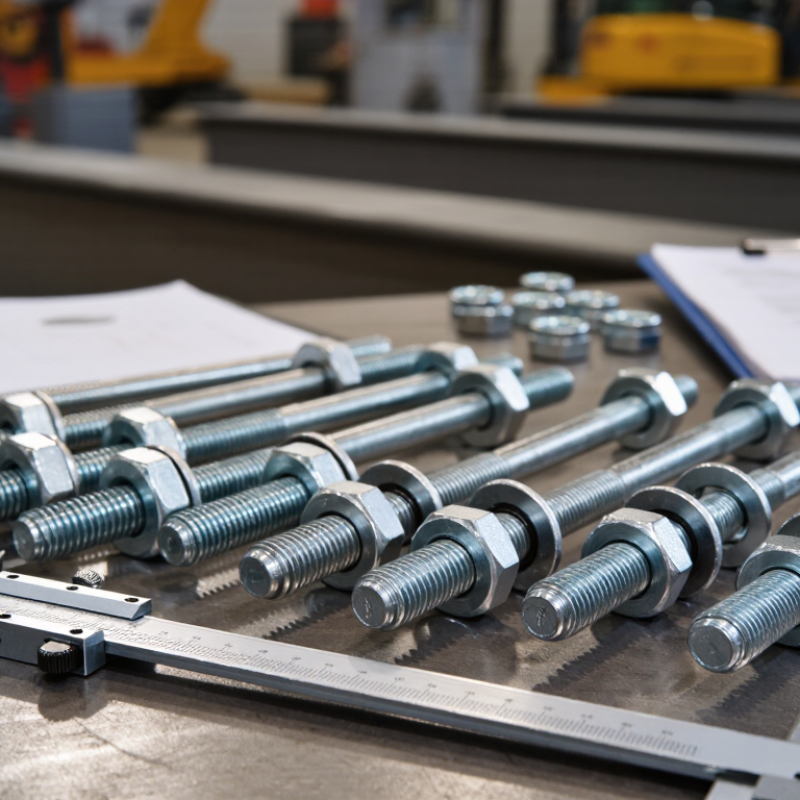
Leading left-handed anchor rod manufacturers distinguish themselves through controlled production, clear testing, and dependable technical support. These rods use reverse threads, which can prevent loosening in rotating equipment and specialized structural assemblies. A reliable manufacturer should provide accurate thread dimensions, material certificates, coating details, and tested load data. Factory inspection records matter. So does traceability.

Manufacturers serving global projects often support carbon steel, alloy steel, and stainless steel options. They should explain tensile strength, yield strength, thread tolerance, and corrosion resistance in practical terms. Experienced suppliers also review drawings before production. This step can catch reversed thread directions, unsuitable lengths, or incorrect washer placement. Small errors become expensive on site. No supplier is perfect, and technical questions deserve direct answers rather than polished promises.

Tips: Confirm the thread direction with a physical sample or drawing. Check thread fit using a matching nut before installation. Request batch-level inspection reports and surface-treatment records. Compare delivery schedules carefully, because custom left-handed rods may require extra machining time. I would also question unclear load ratings. They may reflect ideal laboratory conditions, not real installation stresses. A dependable manufacturer discusses those limits openly and recommends professional engineering review when loads, vibration, or temperature vary.

Top Left Handed Anchor Rod Manufacturers Worldwide - Leading Left-Handed Anchor Rod Manufacturers Worldwide

Global industry reference table based on commonly accepted anchor-rod materials, thread standards, coatings, inspection practices, and manufacturing capabilities.

Manufacturing Capability Common Industry Data Typical Standard or Reference Practical Buying Consideration
Left-Hand Thread Production Thread helix advances counterclockwise when viewed from the rod end; left-hand threading is usually produced as a special-order configuration. ASME B1.1 for Unified Inch threads; ISO 261 and ISO 965 for metric thread systems. Confirm the thread direction on drawings, purchase orders, nuts, couplers, and inspection reports.
Common Rod Materials Carbon steel, alloy steel, and stainless steel are widely used according to load, corrosion, temperature, and installation requirements. ASTM F1554 for structural anchor bolts; ASTM A193 for specified alloy and stainless steel bolting applications; ISO 898-1 for mechanical properties of carbon and alloy steel fasteners. Material grade should be selected from the project design calculation rather than from diameter alone.
Diameter Range Small, medium, and large diameters can be manufactured, with availability depending on the material, thread form, equipment, and order quantity. Unified and metric nominal diameters are specified by the applicable thread standard and engineering drawing. Specify nominal diameter, pitch or threads per inch, tolerance class, and unthreaded length.
Overall Length and Thread Length Fully threaded, partially threaded, and custom-threaded anchor rods are commonly supplied. Dimensions are normally controlled by the approved fabrication drawing and applicable product specification. State total length, thread length at each end, thread run-out, chamfer, and end condition.
Thread Profiles Unified coarse, Unified fine, metric coarse, metric fine, and other engineered thread forms may be available. ASME B1.1, ISO 261, ISO 965, and project-specific drawings. Coarse threads are generally more tolerant of dirt and handling; fine threads may be selected for adjustment or higher tensile stress areas.
Protective Coatings Plain, hot-dip galvanized, zinc-coated, mechanically galvanized, and stainless-steel solutions are used depending on the environment. ASTM F2329 and ISO 10684 for hot-dip galvanized fasteners; coating requirements should be specified with the base material. Allow for coating thickness, thread allowance, nut compatibility, and possible hydrogen-embrittlement controls.
End Configurations Straight rods, double-ended rods, bent anchor rods, hooked rods, headed rods, and rods with welded plates can be produced for different foundations. Configuration is governed by the structural design, fabrication drawing, and applicable anchor-bolt specification. Provide bend radius, leg length, plate dimensions, weld details, and orientation tolerances where applicable.
Mechanical Testing Testing may include tensile strength, yield strength, elongation, hardness, proof load, and torque-related verification where required. ASTM F1554, ASTM A370, ISO 898-1, or the project-specified testing procedure. Request material test certificates and confirm whether testing is performed per heat, lot, or production batch.
Dimensional and Thread Inspection Inspection commonly covers diameter, length, pitch, thread direction, thread gauge acceptance, straightness, coating thickness, and visual condition. Applicable thread gauges, calibrated measuring equipment, ASME B1.1, ISO 965, and purchase-order tolerances. A first-article inspection is useful for nonstandard left-hand thread geometry or complex anchor assemblies.
Traceability and Documentation Commercial supply packages may include certificates of conformance, material certificates, inspection reports, coating records, and packing lists. Documentation level is defined by the contract, specification, and quality plan. Require heat number, lot number, material grade, coating batch, and dimensional inspection results when traceability is critical.
Typical Applications Foundation systems, machinery bases, structural steel connections, tower assemblies, heavy equipment, renewable-energy structures, and maintenance-locking mechanisms. Application-specific engineering codes, structural drawings, equipment manuals, and project specifications. The required preload, embedment, fatigue demand, corrosion exposure, installation method, and access conditions should be reviewed before ordering.

Note: Left-handed anchor rods are commonly manufactured to drawing or project specification. Actual dimensions, grades, tolerances, certifications, and delivery conditions must be confirmed before procurement.

Manufacturing Processes and Quality Control

Top Left Handed Anchor Rod Manufacturers Worldwide

Manufacturing Processes and Quality Control

Reliable left handed anchor rods begin with controlled steel selection and accurate thread design. Manufacturers verify chemical composition, tensile strength, and heat-treatment records before machining begins. The rod is cut to length, chamfered, and formed with a reverse thread. Thread rolling usually improves surface strength and produces cleaner flanks than basic cutting. Small errors matter. A damaged crest can affect installation torque and load transfer.

Experienced quality teams inspect thread pitch, diameter, straightness, and bearing surfaces with calibrated gauges. They also check coating thickness, visual defects, and dimensional consistency across production batches. Tensile tests and hardness checks provide evidence beyond appearance. In one practical inspection, a rod may look perfect but fail a gauge test near the thread runout. That detail should never be ignored. Digital records, sample traceability, and independent calibration make supplier comparisons more reliable. Still, inspection systems are not flawless; recording mistakes and worn gauges require regular review.

Tips: Ask for material certificates, inspection reports, and thread-gauge results before approval. Confirm that nuts match the reverse thread direction. Check several rods from the same batch, not just one sample. Store them away from moisture and impact. A clean finish is useful, but it does not prove structural performance.

How to Evaluate and Select a Reliable Manufacturer

Choosing a reliable left handed anchor rod manufacturer requires more than comparing prices. The supplier must understand reverse-thread geometry, installation direction, load transfer, and site conditions. Ask for detailed drawings, thread tolerances, steel grades, and protective coating specifications. A serious manufacturer can explain these details clearly. Vague answers deserve caution.

Request recent inspection records and material traceability documents. Each batch should connect to a heat number, production date, and test result. Check tensile strength, thread accuracy, straightness, and surface finish. Independent laboratory testing adds confidence. Factory photographs help, but an on-site audit reveals more. Look at storage areas, calibration labels, and measuring equipment.

Samples are essential. Test the rod with the actual nut and coupling system before approving a large order. Confirm left-hand thread markings remain visible after coating. Discuss packaging, moisture protection, replacement procedures, and realistic delivery times. Experienced buyers also assess communication during a technical problem. Slow replies can become costly later. A polished catalog proves little. I would not rely on one successful sample alone; production consistency may still vary. Clarify quality responsibilities in writing, including inspection access and corrective action timelines. Reliable suppliers welcome precise questions, even uncomfortable ones.