Buying Seamless Steel Pipes is not just a matter of choosing a diameter and comparing prices. The right purchase depends on how the pipe will perform in its actual service conditions. Pressure, temperature, fluid type, and installation environment all matter. A pipe for a water line may not suit a high-temperature process. Small details count.
This guide presents 10 practical tips to help buyers evaluate requirements before placing an order. It covers material grade, outside diameter, wall thickness, length, dimensional tolerances, and applicable product standards. It also explains what to check in inspection records and material certificates, and how to assess a supplier’s quality controls. Ask for traceable documents. Verify that the stated grade and dimensions match the purchase specification. If a detail is unclear, get it confirmed in writing.
Price still matters, of course. But a low quotation can leave out testing, protective packaging, or delivery costs. Compare offers on the same technical basis, not just on unit price. Consider how pipes will be stored and handled after arrival; damaged ends or corrosion can create avoidable problems. Even a careful checklist has limits. I have seen specifications that looked complete but missed one operating condition, so review the intended use with a qualified engineer when necessary. A little extra checking now can prevent expensive delays later.
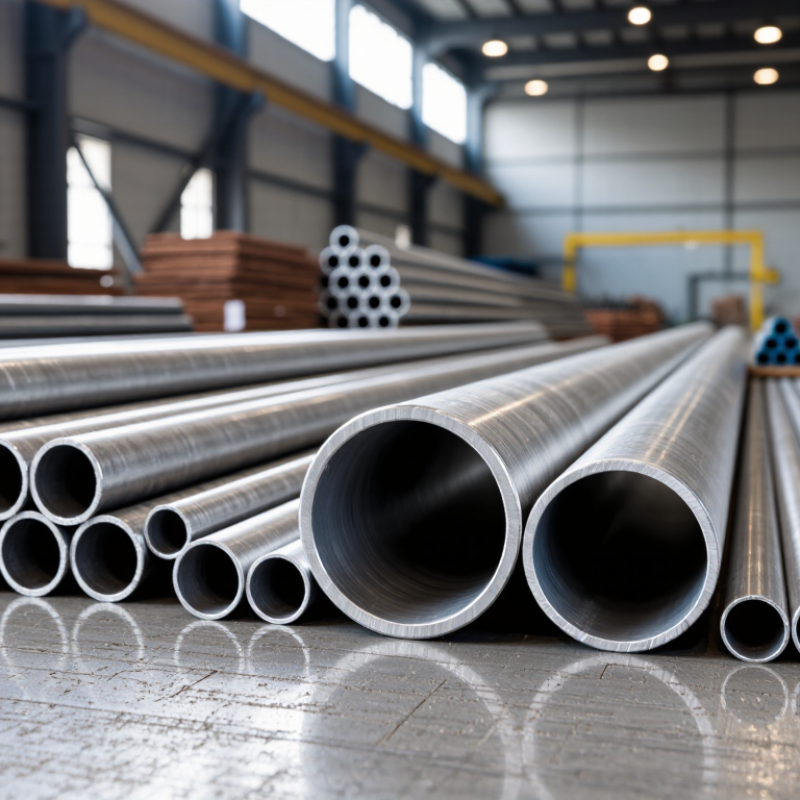
When buying seamless steel pipes, identify the service before comparing prices. Hot-finished pipes suit high-temperature lines and heavy structural loads. Cold-drawn pipes offer tighter dimensions and smoother internal surfaces. Rotary piercing, extrusion, and cold drawing create different grain structures and tolerances. The choice is not merely cosmetic.
Grade selection must match pressure, temperature, corrosion, and welding conditions. Carbon steel grades such as ASTM A106 are common for elevated-temperature service. Low-alloy grades can improve strength at demanding temperatures. Stainless grades resist aggressive fluids, but their cost and heat treatment requirements deserve scrutiny. Check chemical composition, tensile strength, yield strength, impact testing, and hydrostatic test records. A certificate without traceable heat numbers is weak evidence.
Scale matters. The World Steel Association reported 1,888.2 million tonnes of global crude steel production in 2023. The USGS Mineral Commodity Summaries 2024 reported about 2.5 billion tonnes of global iron ore mine production that year. These figures show a large raw-material base, not guaranteed pipe quality. Ask whether the pipe was hot-finished or cold-drawn, and verify dimensional tolerances against the required standard. Review ultrasonic inspection coverage, wall-thickness variation, end protection, and storage conditions. I would not rely on appearance alone. Even experienced buyers miss ovality after transport. Manufacturer claims need independent inspection when failure would be costly.
Begin with the operating envelope, not the supplier’s stock list. Record outside diameter, wall thickness, length, tolerance, and corrosion allowance. Then define design pressure, operating pressure, temperature range, and pressure surges. A pipe sized for normal flow may fail during startup or emergency shutdown. ASME B31.3 requires process piping designs to consider pressure, temperature, materials, and service conditions.
The service fluid changes the specification. Sour gas, steam, seawater, and abrasive slurry demand different material controls. Check chemical compatibility, impact toughness, hardness limits, and weldability. ISO 3183 provides requirements for line pipe, while material certificates should support heat number traceability and mechanical test results. Do not accept “carbon steel” as a complete grade description. It is not.
Industry data shows why careful selection matters. World Steel Association’s World Steel in Figures 2024 reports 1,892.2 million tonnes of crude steel production in 2023. High output does not guarantee consistent pipe quality. The International Energy Agency’s World Energy Outlook 2023 expects global LNG trade to grow by more than 50% by 2030, increasing demand for pressure-rated piping. That forecast is useful, but it is not a design basis. Recheck project data. I have seen purchase requests omit minimum temperature, which later forced costly revisions.
Buying seamless steel pipes is less about finding the lowest quote than controlling uncertainty. Start by matching the pipe to the service, pressure, temperature, fluid, and installation environment. Confirm the required standard and grade in writing. Standards may differ by project, country, and end use. Ask whether testing covers chemical composition, tensile strength, hardness, dimensions, and hydrostatic performance.
Request valid certifications from qualified inspection bodies, not just a supplier’s internal declaration. Review the material test certificate carefully. It should identify the heat number, batch, size, grade, test results, and applicable standard. Paperwork is evidence. Traceability is stronger when markings on each bundle match the certificate and shipping documents. Keep copies throughout receiving, storage, cutting, and installation. A missing heat number can create expensive confusion later.
Supplier quality requires more than a polished website. Check manufacturing experience, process controls, inspection equipment, nonconformance records, and corrective actions. Ask for recent sample reports and, when risk is high, arrange independent inspection before shipment. I have seen documents look complete while package markings were inconsistent. That mistake is easy to miss. A practical checklist should include surface defects, wall thickness, ovality, straightness, end protection, packing, and moisture control. No system is perfect. Recheck critical details before acceptance, especially when delivery pressure encourages shortcuts.
10 Tips for Buying Seamless Steel Pipes
Compare specifications before comparing prices. Confirm outside diameter, wall thickness, length, steel grade, manufacturing standard, and tolerance. Ask whether the pipe is hot-finished or cold-drawn. These details affect strength, weight, machining, and service life. Request mill certificates, hydrostatic test records, and dimensional inspection results. For critical applications, consider independent inspection. It costs more, but one failed batch costs much more.
Pricing needs a clear basis. Compare the same quantity, currency, specification, and delivery point. Check whether quotes include testing, marking, packing, taxes, and documentation. A low price may exclude important charges. Ask for the price per tonne and per pipe when possible. This exposes weight differences. I once compared two offers that looked identical, but one used a thinner wall tolerance. The saving disappeared after machining.
Lead time should include production, inspection, packing, and transport. Ask for milestone dates, not only a shipping promise. Confirm the available quantity before placing a deposit. Delivery terms also matter. Clarify the agreed Incoterm, freight responsibility, insurance, unloading point, and customs documents. Build a small schedule buffer. Real projects rarely move perfectly. A spreadsheet helps, but it cannot replace written confirmation. Recheck loading dates before dispatch, especially when several pipe sizes share one shipment.
| 10 Tips for Buying Seamless Steel Pipes? - Compare Specifications, Pricing, Lead Times, and Delivery Terms | ||||
|---|---|---|---|---|
| Use this checklist to compare like-for-like offers. Prices and lead times below are planning examples, not live quotations; confirm them against the grade, dimensions, quantity, market conditions, and delivery location. | ||||
| Buying check | What to specify or verify | Example comparison data | Why it matters | Question to ask the supplier |
| 1. Define the application | State whether the pipe is for pressure service, structural use, mechanical tubing, or another application. Identify the governing code and service conditions. | Example: pressure-service pipe ordered to ASTM A106 Grade B, subject to the project specification and applicable code. | A pipe that meets a general dimensional requirement may not meet the required service, design, or inspection requirements. | Which product standard and edition will appear on the certificate and purchase documents? |
| 2. Compare material grade | Specify the grade and required chemical and mechanical properties. Check whether supplementary or project-specific requirements apply. | ASTM A106 Grade B is a common seamless carbon-steel grade for high-temperature service; ASTM A53 Grade B is another common specification with different scope and requirements. | Similar-sounding grades or standards are not automatically interchangeable. Confirm suitability with the project engineer. | Can you provide the grade-specific test results and confirm that substitutions require written approval? |
| 3. Lock down dimensions | List outside diameter, wall thickness or schedule, length, dimensional tolerances, and quantity. Identify whether dimensions are nominal or actual. | Example comparison basis: NPS 2, Schedule 40, standard random lengths. NPS is a nominal designation; it is not the measured outside diameter. | Price, weight, fit-up, and pressure design depend on the actual dimensional specification. | Does the quotation state the applicable dimensional standard, tolerances, and length range? |
| 4. Compare test and inspection scope | Specify required hydrostatic or nondestructive examination, visual inspection, dimensional checks, and any third-party inspection. | Requirements depend on the product specification and purchase order; do not assume every inspection option is included in a base quote. | Different inspection scopes can change cost and delivery time, and affect acceptance at the receiving site. | Which tests are included, what are the acceptance criteria, and who pays for additional inspection? |
| 5. Review traceability and documents | Request material test reports, heat or batch identification, inspection records, and certificates required by the contract. | For applicable orders, request a material test report showing the relevant heat analysis and mechanical test results, with traceability to the supplied pipes. | Complete documentation helps verify conformance and supports receiving, quality, and audit processes. | Will each bundle or pipe remain traceable to its heat number through packing and delivery? |
| 6. Compare pricing on the same basis | Compare the same grade, size, wall, length, quantity, inspection scope, currency, and delivery basis. Separate product cost from freight, duties, and taxes. | Budgeting illustration only: quotes may be expressed per metric tonne or per piece. No market price is provided here; obtain dated quotations for the specified item and destination. | A lower unit price may exclude tests, protective packing, inland transport, or other costs needed to receive usable material. | What is included in the quoted price, how long is it valid, and what charges are excluded? |
| 7. Confirm production and lead time | Ask whether material is available from stock or requires production. Confirm the time for inspection, documentation, packing, and dispatch. | Planning example only: stocked material may be dispatchable within days, while production or special testing may take several weeks or longer. Actual schedules depend on availability and order scope. | A quoted manufacturing lead time may not include inspection, export preparation, or transit to the destination. | What event starts the lead-time clock, and what are the promised inspection, dispatch, and arrival dates? |
| 8. Clarify delivery terms | State the named delivery place and agreed Incoterms® rule and version, such as FCA, CPT, CIP, DAP, or another suitable term. | For example, “FCA [named place], Incoterms® 2020” identifies a different allocation of delivery responsibilities than “DAP [named destination], Incoterms® 2020.” | The rule and named place help define transport, cost, risk transfer, and export or import responsibilities. | Which Incoterms® rule and named place apply, and who arranges and pays for each transport leg? |
| 9. Check packing and transport protection | Agree on end protection, bundling, marking, weather protection, loading method, and any corrosion protection required for the route and storage period. | Confirm bundle dimensions and mass against lifting equipment, container limits, and site unloading capability. | Suitable packing reduces handling damage and makes receiving and identification more reliable. | How will pipes be protected, marked, and secured, and can the packing list show bundle weights and contents? |
| 10. Set acceptance and payment terms | Document inspection rights, rejection or claim process, delivery tolerances, payment milestones, and remedies for nonconforming material. | Example checklist: define when inspection occurs, what evidence is required for a claim, and how shortages or defects are reported. | Clear contract terms reduce disputes if delivered quantity, condition, documentation, or specification differs from the order. | What are the acceptance criteria, claim notification period, and payment conditions? |
10 Tips for Buying Seamless Steel Pipes?
A pipe can look sound and still have hidden problems. Check the full length under bright light for dents, deep scratches, rust, and damaged ends. Pay close attention to areas where protective coatings are thin. Use a straightedge or suitable measuring tools to verify dimensions against the purchase specification. Small deviations can affect fit during installation. They are easy to overlook.
Tips: Match each pipe’s markings to its heat number, size, grade, and manufacturing standard. Review the material test certificate and confirm its details correspond to the delivered batch. Check that required inspection records and traceability documents are complete. Compare the stated tolerances with your order, not just a general catalogue. Keep photographs and records of any discrepancy before acceptance.
Compliance needs more than a stamp on a document. Confirm that the specified standard and grade suit the intended service, operating conditions, and project requirements. If certificates are unclear, ask the supplier for corrected records before signing off. I have seen paperwork arrive separately, which makes checking harder. That may be routine, but it is worth questioning. Quarantine questionable pieces, label them clearly, and resolve discrepancies with the supplier and your inspection team. Accept only when the physical condition, documentation, and agreed requirements align.