How to Choose the Right Stainless Steel Elbow?
Choosing a Stainless Steel Elbow begins with the service conditions, not the product label. What fluid will pass through it? At what temperature and pressure? Will chloride, moisture, or repeated thermal cycling challenge the fitting? These details help determine the alloy, wall thickness, connection type, and bend geometry. Small differences matter. A poorly matched elbow can become a leak point, complicate welding, or require premature replacement.
Industry scale offers useful context, but not a shortcut. worldstainless reported 58.4 million tonnes of global stainless steel production in 2023 in its Stainless Steel in Figures 2024 report. That figure describes crude steel production, not elbow demand or performance. Specifications still need closer review. Check the project’s applicable piping standard, dimensional requirements, material grade, and inspection documents. For butt-weld fittings, buyers commonly review ASTM A403 material requirements and ASME B16.9 dimensions where applicable. Confirm the exact editions and project requirements with the responsible engineer.
Welding-metallurgy expert John C. Lippold’s published work highlights how welding behavior depends on alloy composition and fabrication conditions. A practical paraphrase—not a verbatim quotation—is: “Match the material to the service environment, then verify the fabrication route.” That distinction is easy to miss. This guide examines the decisions that matter: alloy selection, pressure and temperature, elbow angle, manufacturing quality, and traceable documentation. No single grade fits every line. A careful specification is the better starting point.
Identify the Stainless Steel Elbow’s Purpose and Operating Conditions
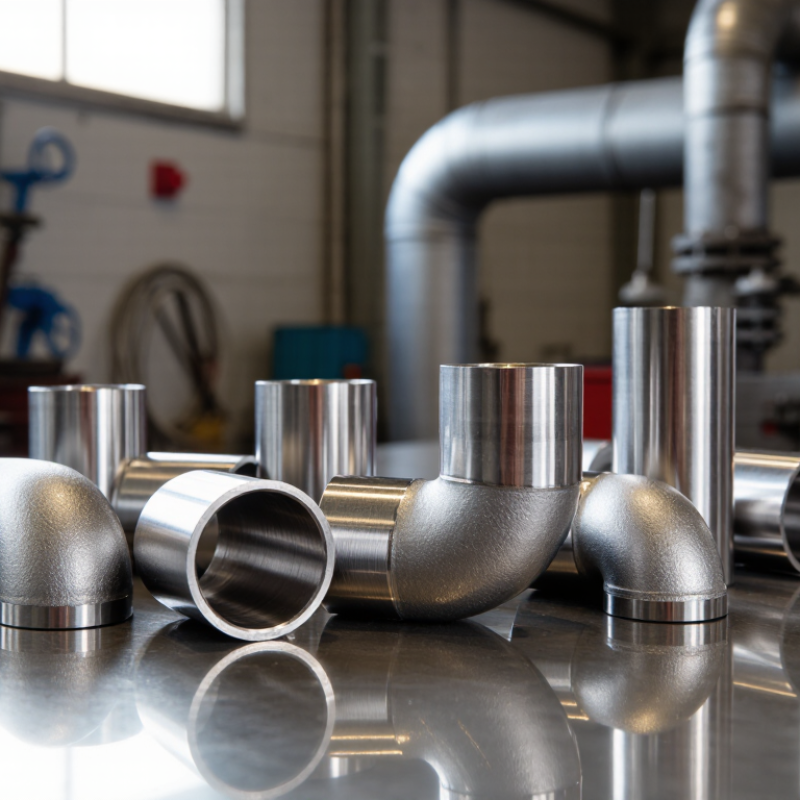
Start by defining the elbow’s job: turn a process line, fit a restricted layout, or limit flow disturbance. A tight 90-degree bend saves space, but may increase turbulence and pressure loss, especially at high flow. Record the fluid, design pressure, temperature range, flow rate, and cleaning method before selecting material or bend radius.
Fluid chemistry matters as much as temperature. Chlorides, acids, and stagnant pockets can increase pitting or crevice-corrosion risk. Choose a grade using actual concentration and temperature data, not just a “stainless steel” label. Euro Inox’s Tables of Technical Properties gives mean thermal expansion values of about 16.0 × 10⁻⁶ K⁻¹ for 1.4301 (304) and 15.9 × 10⁻⁶ K⁻¹ for 1.4401 (316), over 20–100°C. A small difference. Yet hot, long pipe runs can shift supports and load elbow welds.
Match the elbow radius and end type to the pipe schedule, joining method, and inspection access. ASME B16.9 covers factory-made wrought butt-welding fittings; verify dimensions and pressure design against the project’s piping code. For cycling service, check thermal movement and vibration, not nominal pressure alone. Operating records can be imperfect, so verify assumptions against the actual service conditions. Details matter.
Match the Elbow Size, Schedule, and Connection Type to the Pipe
Choose an elbow by the pipe’s nominal size, then confirm the dimensions in the project specification. Nominal size alone can be misleading: check the pipe’s outside diameter and wall thickness against the fitting data. Schedule describes wall thickness, not the elbow’s overall strength in every service condition. Pressure, temperature, and material grade matter too. A Schedule 40 pipe, for example, should not be paired with an elbow simply because the nominal sizes match. Check the specified schedule and applicable dimensional standard. Small mismatch, big headache.
The connection must match the pipe end and the installation method. Butt-weld elbows need compatible end preparation and careful alignment; socket-weld and threaded fittings require their corresponding pipe ends. Thread type and engagement deserve a second look, especially where leaks would be difficult to inspect. Fit-up matters. Confirm the elbow angle and radius as well: a tight-radius elbow may save space, while a longer-radius one can reduce flow disturbance. Before ordering, compare the pipe and elbow drawings or datasheets, including material and end details. One overlooked dimension can turn a straightforward installation into rework.
Choose the Bend Angle and Radius for the Required Flow Path
The right stainless steel elbow follows the flow path, not just the drawing. A 90-degree turn may fit a tight corner, while two 45-degree elbows can create a gentler route when space allows. ASME B16.9 specifies common 90-degree elbow proportions: long-radius elbows use a centerline radius of 1.5 times nominal pipe size; short-radius elbows use 1.0 times nominal pipe size. That difference changes the space needed and can affect pressure loss. Small details matter.
Crane Technical Paper No. 410 evaluates fittings using resistance coefficients and equivalent lengths. Its method highlights why an elbow’s loss depends on geometry and operating conditions, including flow regime. For a high-flow line, compare the expected pressure drop for the actual angle and radius, rather than assuming every 90-degree elbow performs alike. A long-radius bend often reduces resistance, but it may not suit a cramped equipment connection. Measure the spool. Check clearances, flow rate, and pressure limits with the piping designer. In practice, field routing can differ from a clean drawing; I would verify the installed centerline before ordering. That check is easy to skip.
Select a Stainless Steel Grade for Corrosion and Temperature Conditions
Choosing the right stainless steel elbow begins with the fluid, not the fitting’s appearance. Grade 304 often suits mild indoor service, but chloride-rich water can cause pitting. Grade 316 contains molybdenum, which improves resistance to chlorides; it is not immune to attack. Consider salt spray, cleaning chemicals, concentration, and stagnant pockets around the elbow. Small details matter.
Temperature changes the decision. A line carrying hot fluid may face thermal cycling, oxidation, or strength loss, especially near welds. Stabilized grades such as 321 can be considered for certain elevated-temperature applications, while 310 is used in some high-heat environments. These are not automatic upgrades. Check the actual temperature range, pressure, and fluid chemistry against reliable material data. Match the elbow’s grade to the pipe and welding procedure where practical. I would pause over one point: a grade that performs well in a steady test may behave differently during repeated heating and cooling. When conditions are uncertain, ask a qualified materials specialist to review the service details before ordering.
How to Choose the Right Stainless Steel Elbow?
Compare typical alloy composition to shortlist grades for corrosion and temperature conditions.
How to read this chart: Values are approximate typical composition in weight percent; actual specifications allow ranges. Higher chromium supports oxidation resistance, while molybdenum can improve resistance to pitting and crevice corrosion. Use the chart to shortlist grades, not as a temperature rating: confirm suitability for the operating temperature, fluid chemistry, fabrication, and applicable piping code.
Verify Pressure Ratings, Standards, and Compatibility Before Purchase
Before buying a stainless steel elbow, check its pressure rating against the system’s actual operating conditions. Pressure capacity can change with wall thickness, elbow type, material grade, and temperature. A fitting rated for one service may not be suitable when heat rises or pressure surges. Small details matter.
Confirm the standard and connection style on the product documentation. For example, butt-weld elbows and threaded elbows may follow different dimensional standards. Match the elbow’s schedule, end preparation, and dimensions to the adjoining pipe. Do not guess. A mismatch can complicate installation or create a weak point, even when both parts are stainless steel.
Compatibility also means checking the fluid, temperature range, and corrosion conditions. Different stainless grades do not behave identically in chloride-rich water, cleaning chemicals, or outdoor environments. Compare the material specification with the piping design, and ask for traceable documentation rather than relying on a short catalog description. I still find pressure ratings easy to treat as a single number; they need context. If service conditions or standards are unclear, have a qualified piping professional review the selection before purchase.