Essential Tips for Choosing Stamping Die Components?
Choosing the right Stamping Die Components is crucial for any manufacturing process. The precision of your production depends heavily on these components. Selecting the best materials and designs can significantly enhance the quality of your stamped parts. However, it’s not always clear which components will work best for your specific needs.
Many factors influence the choice of Stamping Die Components. Understanding the properties of different metals is key. For example, harder materials can offer greater durability but may also lead to complications in fabrication. You might think that cheaper components save money, but they can result in higher long-term costs due to wear and tear.
Moreover, collaboration with experienced engineers or suppliers can offer insights you may overlook. Their expertise can guide you in making informed choices. Always consider the balance between quality and cost. Reflecting on past projects can reveal patterns that help refine your selection process. This continuous learning approach can elevate your production standards.

Understanding the Basics of Stamping Die Components
When it comes to stamping die components, understanding the basics is crucial. These components include
the die block, punches, and guides. Each part plays an essential role in the
overall functionality. The die block acts as the foundation, ensuring stability during operation. Choosing a punch with the right shape
can significantly impact the final product quality. This is not a one-size-fits-all situation.
Attention to detail is vital. The material quality of each component can affect durability. Steel is often preferred for its strength,
but other materials may work depending on specific needs. Think about how these materials wear over time. Are they suited for your
production volume? Reflecting on this can lead to better decisions.
It's important to consult with experts. They can provide insights that might not be obvious. Sometimes, what looks good on paper
does not translate well in practice. This is where experience plays a critical role. Balancing cost and quality could also lead to
unexpected challenges. Each decision should consider both immediate needs and
long-term performance.
Key Factors to Consider When Selecting Materials for Dies
Choosing the right materials for stamping die components is crucial for optimal performance. The material directly affects the lifespan and efficiency of the die. High-quality tool steel is commonly used due to its durability and resistance to wear. However, it is essential to consider the specific application needs when selecting material types. For instance, some materials might lack the necessary hardness for certain operations, leading to premature wear.
Consideration of heat treatment is also key. Heat-treated materials increase hardness and strength, enhancing the die’s longevity. However, over-tempering can cause brittleness, which may break under pressure. Balancing these factors requires experience and a solid understanding of material properties.
Another aspect to reflect on is cost versus quality. While cheaper materials may save money short-term, they often result in higher replacement rates. This can lead to increased overall costs. Evaluate your production volume and efficiency. Some may find that investing in higher-quality materials pays off in the long run. Make informed choices to ensure the durability and reliability of your stamping dies.
Assessing the Precision and Tolerance Requirements for Dies
When selecting stamping die components, precision and tolerance are critical. Precision refers to how accurately the die can reproduce a design. Tolerance indicates how much deviation is acceptable from the desired measurements. High tolerance levels can lead to better fitting parts, which are crucial in manufacturing. However, achieving these standards can be challenging and often requires adjustments and testing.
Many factors influence precision and tolerance. The material of the die can significantly impact these characteristics. A softer material may deform easily, compromising tolerances. Additionally, the fabrication process used to create the die impacts its precision. Techniques like CNC machining can enhance accuracy, but they are not foolproof. Continuous monitoring during production is essential to ensure the dies meet required specifications.
Attaining the perfect balance in precision and tolerance is not always achievable. Some manufacturers may overestimate what is possible. It’s vital to review past projects and learn from any discrepancies. Engaging skilled engineers can offer insights into what tolerances are realistic for specific applications. Understanding the limits is as important as knowing what can be achieved. This reflective approach can lead to better decision-making in future stamping projects.
Evaluating Die Design: Types and Their Suitability for Projects
When evaluating die design, it’s crucial to understand the various types available. Each type of die serves a unique purpose. For instance, progressive dies allow for multiple operations in one stroke, enhancing efficiency. In contrast, compound dies perform several cuts simultaneously, suited for simpler tasks. Knowing the project requirements influences the choice of die design significantly.
Choosing the right stamping die components is essential for project success. Consider the material you are working with. Harder materials may require more robust dies. Also, scrutinize the design complexity. Simple designs are easier to manage but may limit creativity.
Tip: Always assess the expected production volume. High-volume needs might justify investing in more complex dies. Sometimes, a simpler approach reduces costs but may not meet future project needs. This balance between complexity and practicality is vital. Remember, reflect on past projects for better choices in the future. Your experiences provide valuable insights into effective die selection.
Maintenance Tips for Prolonging the Life of Stamping Dies
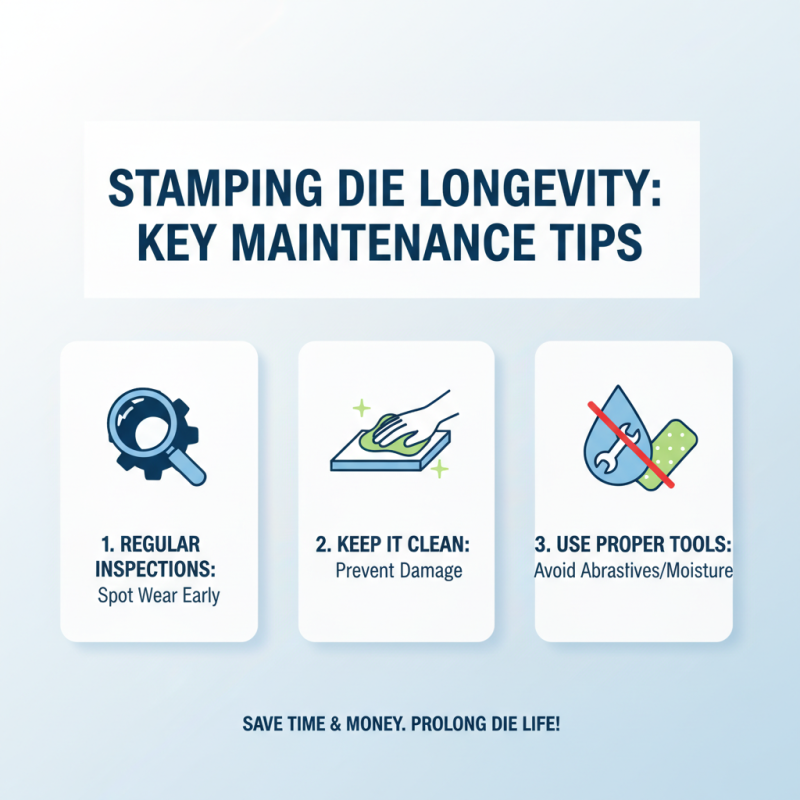
Proper maintenance of stamping dies is crucial in extending their lifespan. Regular inspections can reveal early signs of wear or damage. Noticing small issues early can save you from larger problems later. Keep the working surface clean. Dust, dirt, and moisture can cause significant damage over time. Use appropriate cleaning solutions and avoid abrasive materials.
Lubrication plays a vital role as well. Apply the correct lubricants to reduce friction and wear. Over time, lubrication may degrade, so regular application is essential. Create a maintenance schedule to check lubrication levels frequently.
Training operators is another key factor. Well-trained staff can better recognize when to perform maintenance tasks. They can also follow best practices in handling dies. Encourage a culture of care and respect for the tools. Remember, neglecting these details can lead to costly repairs or replacements. Understanding these small yet significant measures can make all the difference in the longevity of stamping dies.